Things to Do in Ethiopia
Coffee's birthplace, rock-hewn churches, and a clock running seven years behind
Top Things to Do in Ethiopia
Find activities and tours you'll actually want to do. Book through our partners -- no booking fees.


Plan Your Trip
Essential guides for timing and budgeting
Climate Guide
Best times to visit based on weather and events
View guide →Day Trips
The best excursions and nearby destinations worth the journey
Explore day trips →Where to Stay
Best neighbourhoods, hotel picks, and booking tips
Find hotels →Travel Insurance
What's required, what coverage matters, and how to get a quote
Read guide →What to Pack
Climate-specific gear, essentials, and what to leave at home
See packing list →When Should You Visit Ethiopia?
Tap a month for weather, crowds, and highlights
View full year-round climate guide →

Your Guide to Ethiopia
About Ethiopia
Coffee tastes like history in the land that found it first. Mercato in Addis Ababa, Africa's largest open-air market, sprawls under tin roofs that rattle when the wind picks up. Green beans roast over charcoal in a long-handled pan while frankincense smoke spirals skyward. The woman tilting the jebena has poured this three-round ceremony since before pour-overs were invented.
Ethiopia snaps every East Africa template you packed. Lalibela's eleven rock-hewn churches, carved downward into volcanic tuff in the twelfth century, sit below ground in trenches linked by tunnels. The air smells of damp stone and centuries of beeswax; white-robed priests still hold dawn services as if eight hundred years were yesterday.
North in the Simien Mountains, gelada baboons with bleeding-heart chests graze near four-thousand-meter cliffs while Ras Dashen vanishes into cloud. In walled Harar, hyenas glide through gates at dusk to take raw meat from the Hyena Man. Stand three feet away and you hear the jaw click and smell the breath. Ethiopia is not easy.
Roads on the northern circuit take twice the hours the distance suggests. The calendar trails the Gregorian by seven years, so confirming dates needs patience and a sense of humor. Amharic script looks alien. Outside Addis, English fades fast. Yet the country resisted colonial rule when neighbors fell. Strangers pull you into coffee ceremonies that last an hour.
Injera, the spongy fermented teff flatbread that doubles as plate, utensil, and flavor, becomes the taste you miss most after leaving. The highlands hold some of Africa's most arresting landscapes. Ethiopia does not perform. That is why you come.
Travel Tips
Transportation: Ethiopian Airlines links Addis Ababa to Lalibela, Gondar, Axum, and Bahir Dar in flights under an hour. That beats the bone-rattling overland slog by days. Book domestic legs with your international ticket for a steep discount. Bought alone, they cost far more. In Addis, blue-and-white minibuses go everywhere for pocket change. No maps exist. Conductors hanging from the sliding door shout destinations in rapid Amharic. Learn fast. The light rail between Mercato and Meskel Square is cheap but crushes bodies at rush hour. For the northern circuit, hire a driver for the week. The price is lower than you fear and saves days on roads that test every joint.
Money: Ethiopia runs on cash. The birr is the only currency accepted. ATMs exist in Addis Ababa; Commercial Bank of Ethiopia machines are the most reliable. They vanish in smaller cities. Carry enough birr for the entire northern circuit before leaving the capital. International cards work at some upscale hotels. But assume they will not. Black-market rates tempt. Yet the practice is illegal and the premium over bank rates is not worth the risk. Ethiopia costs noticeably less than Kenya or Tanzania for comparable experiences. Tips are expected at restaurants. Service charges on the bill do not always reach the staff.
Cultural Respect: Orthodox Christian traditions shape daily life in ways that surprise secular travelers. Remove your shoes before entering any church; Lalibela's guardians will remind you if you forget. Women should cover shoulders and knees at religious sites. Some Tigray churches still bar women entirely. Fasting days, Wednesdays and Fridays, mean many restaurants serve only plant-based dishes. This is a gift: Ethiopia's lentil and split-pea stews seasoned with berbere are extraordinary. Time works differently. Ethiopian clocks start at dawn, so their 1 o'clock is your 7 AM. Any stated time might be Ethiopian or international, a six-hour gap that can quietly ruin a morning.
Food Safety: Injera is everything: plate, utensil, and flavor carrier. The spongy, sour teff flatbread ferments for days before hitting a griddle the size of a bicycle wheel. Tear a piece, pinch a mound of wat, and eat with your right hand only. The sourness wins most travelers by the second meal. Kitfo, raw seasoned beef, is the dish Ethiopians prize. Order it leb leb for a light sear if raw meat worries you. Tap water is unsafe everywhere. Stick to bottled, even for brushing teeth. On fasting days, the beyaynetu platter, a mosaic of lentil and legume stews on one sheet of injera, is entirely plant-based and often the strongest thing on the menu.
When to Visit
Ethiopia cleaves its calendar into two halves: dry and wet. One governs road conditions, hotel rates, everything. October through May stays dry; June through September is kiremt, daily deluge. Pick your reason to come, then pick your month.
October and November win most travelers. Rains finish, highlands glow emerald, wildflowers smother the Simien Mountains, crowds haven't landed yet. Addis Ababa days sit at 20-25 degrees Celsius (68-77 degrees Fahrenheit), nights drop to 10 degrees Celsius (50 degrees Fahrenheit) so pack a jacket. Rooms are still easy and prices sit well below peak.
December through February is peak, no question. Timkat, the Orthodox Epiphany in mid-January, floods Gondar and Lalibela with tens of thousands in white robes, torches, songs that run until sunrise. Build your trip around it. Peak means packed: domestic flights vanish weeks ahead, guides sell out, Lalibela hotels can charge forty to fifty percent above low-season rates. Book flights and beds at least a month early.
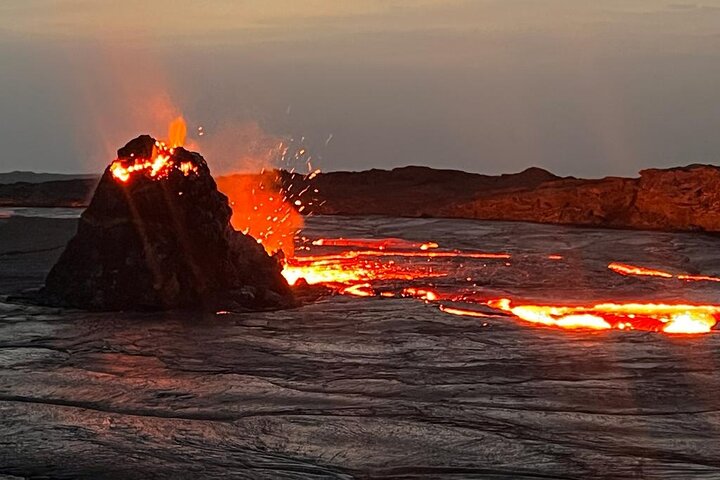
March through May heats up fast. Highlands stay mild at 22-28 degrees Celsius (72-82 degrees Fahrenheit), but the Danakil Depression tops 45 degrees Celsius (113 degrees Fahrenheit) by April and the Omo Valley roasts beside it. Tour groups thin, so sites open up and prices flex. Simien trails dry out and lose the bloom that follows the rains.
June through September is full monsoon. Afternoon cloudbursts turn trails to slick clay and roads to rumor. Yet Meskel, the Finding of the True Cross, lands in late September and closes the season with towering bonfires in Addis Ababa's Meskel Square and nationwide feasting. Budget travelers take note: rooms hit their cheapest, domestic flights have space, Lalibela's churches echo with footsteps, not tour chatter.
Rain-scrubbed light over the highlands is crystal. If you can handle weather that flips hourly, the solitude pays off.
More Ways to Experience Ethiopia
Tours, day trips, and local experiences curated by on-the-ground operators.
Didn't see anything interesting yet?
Browse Viator's full catalog of tours, day trips, food experiences, and private guides in Ethiopia.
See All Ethiopia Tours on Viator